Contact Us
WhatsApp
+65 8012 2467
Email Us
contactus@thopps.com
Contact Us
WhatsApp
+65 8012 2467
Email Us
contactus@thopps.com

Learning Series : AI-Assisted Engineering
How modern engineers use LLMs to rethink the way software is built.
For decades, software development followed a familiar rhythm.
Engineers would carefully design systems, write code line by line, debug errors, and gradually assemble working applications.
Progress depended largely on how quickly developers could translate ideas into code.
Today, that rhythm is changing.
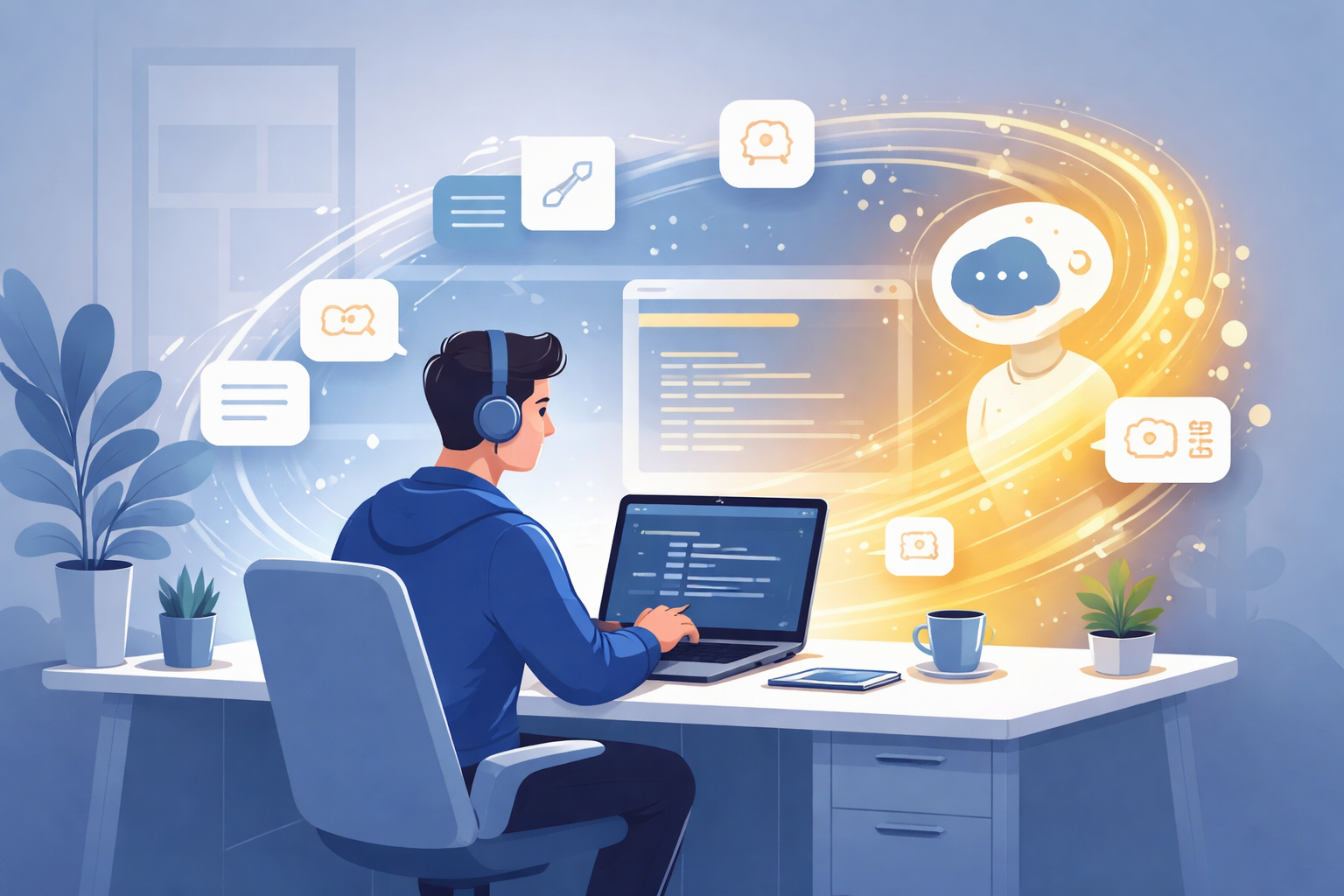
Large Language Models (LLMs) are introducing a new layer of assistance into the development process. Instead of writing every line manually, developers increasingly collaborate with AI tools to generate, refine, and analyze code.
The result is not simply faster coding — it is a shift in how software development itself works.
Traditionally, building software followed a fairly linear process.
A developer would:
Every stage required manual effort.
Even simple tasks such as creating project structures, writing boilerplate functions, or generating test cases consumed valuable time.
Productivity depended heavily on how quickly developers could produce code from scratch.

AI tools are introducing a different approach.
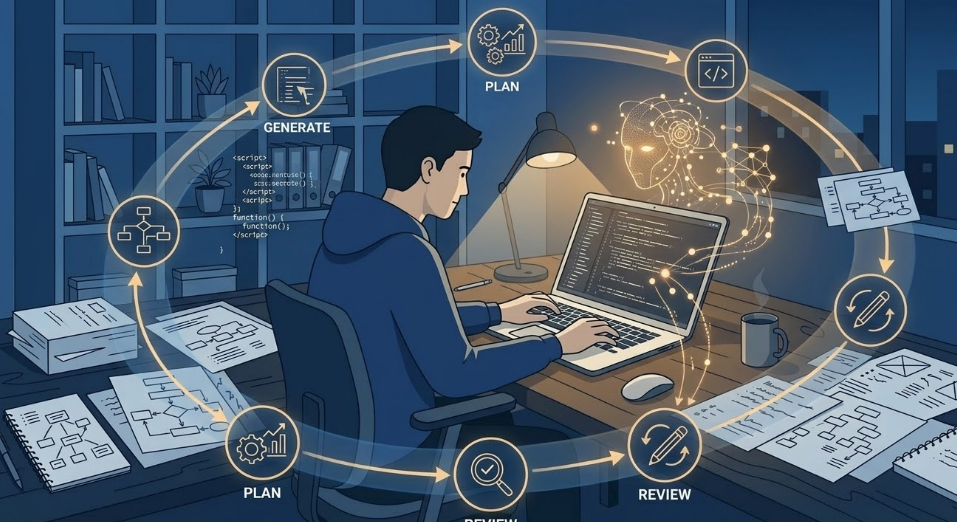
Instead of writing everything manually, engineers now follow a more iterative cycle:
Plan → Generate → Review → Modify → Repeat
In this workflow:
This turns coding into a collaborative interaction between human reasoning and machine generation.
The developer’s role shifts from typing every line to guiding and shaping the solution.
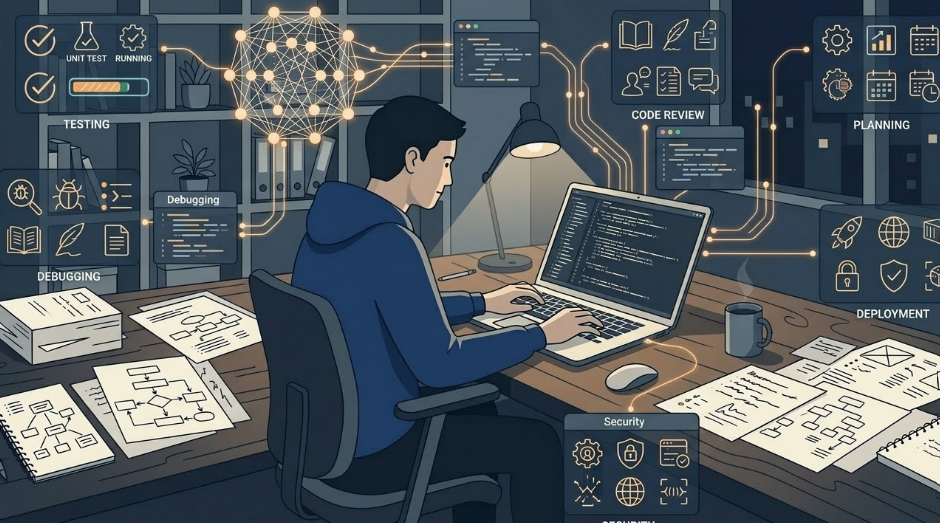
AI is no longer limited to simple code autocompletion.
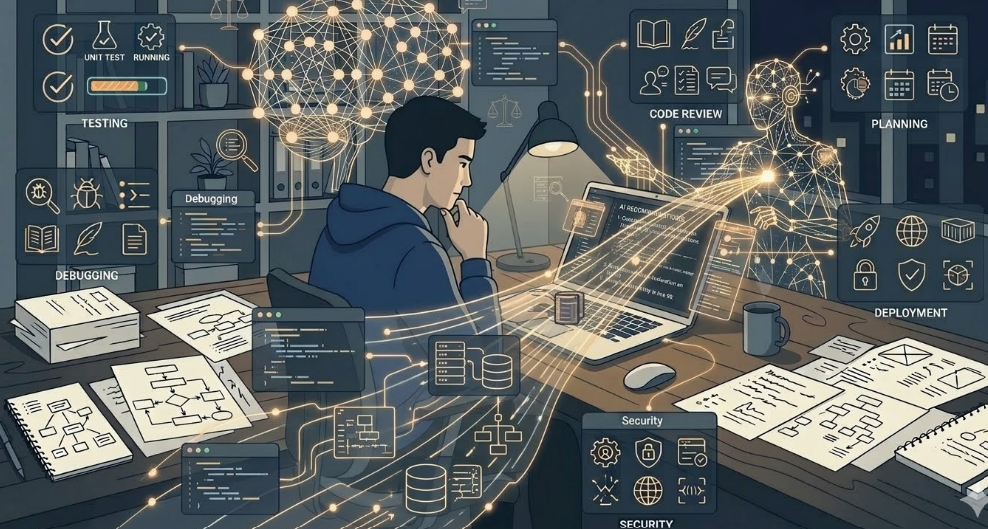
Today, tools exist for nearly every stage of development.
Some assist with code generation, others with debugging, documentation, testing, or security analysis.
Developers now work alongside tools such as:
Each category targets a different friction point in the development lifecycle.
The goal is not to replace engineers, but to remove repetitive effort so developers can focus on design, reasoning, and system architecture.
Using AI effectively requires more than simply asking it to generate code.
The most productive developers treat AI tools as collaborators, not replacements.
They use them to:
This allows engineers to spend more time on problem solving and system design, where human judgment is still essential.
As AI tools become more capable, the role of engineers evolves.
Writing code becomes easier.
But deciding what should be built and how it should behave remains a deeply human responsibility.
Engineers must still evaluate:
AI can accelerate development, but it cannot replace engineering judgment.
AI tools are not eliminating software engineering — they are reshaping it.
Modern developers are learning to move from writing every line of code to directing intelligent tools that assist in building systems.
Those who understand how to integrate AI into their workflow will not only work faster — they will design better systems.