Contact Us
WhatsApp
+65 8012 2467
Email Us
contactus@thopps.com
Contact Us
WhatsApp
+65 8012 2467
Email Us
contactus@thopps.com

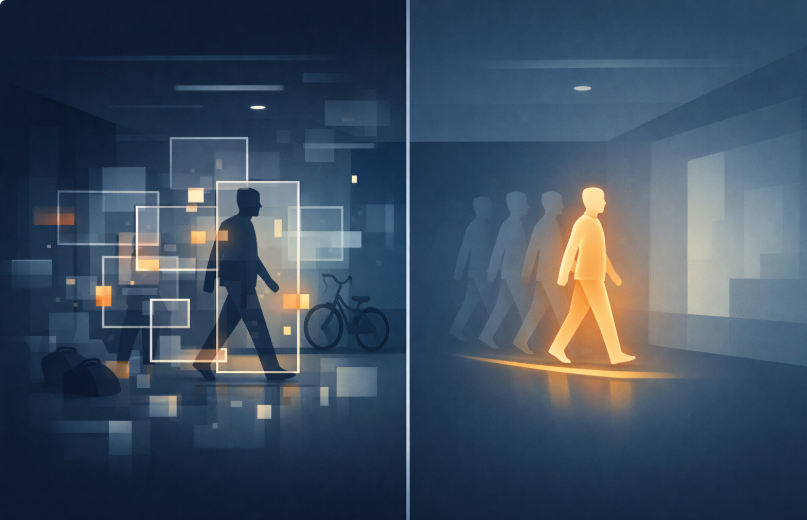
Learning Series: When Surveillance Meets Reality
Previous: https://varsity.thopps.com/from-detection-to-behaviour
Rethinking how intelligent surveillance systems are designed
For a long time, I thought the hardest part of building video analytics systems was detection.
Choosing the right model.
Improving accuracy.
Reducing false positives.
Tuning confidence thresholds.
It felt technical. Precise. Measurable.
But something still felt off.
The system was detecting correctly —
yet it didn’t feel intelligent.
That’s when I realized the real shift isn’t in better detection.
It’s in changing the goal.
Detection answers a very specific question:
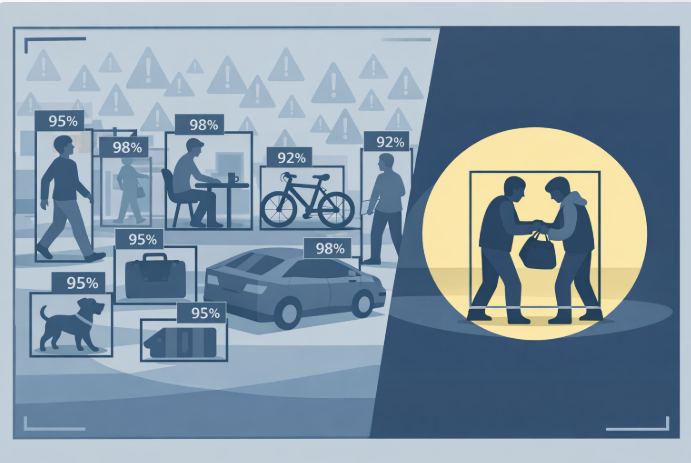
What is present in this frame?
That question is useful. Necessary. Foundational.
But behaviour answers something very different:
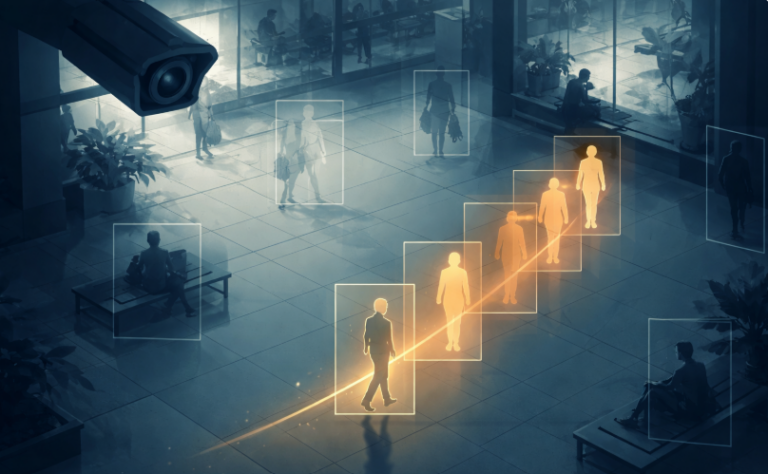
What is unfolding over time?
And the moment behaviour becomes the goal, everything changes.
You stop asking:
And you start asking:
Detection is instantaneous.
Behaviour requires accumulation.
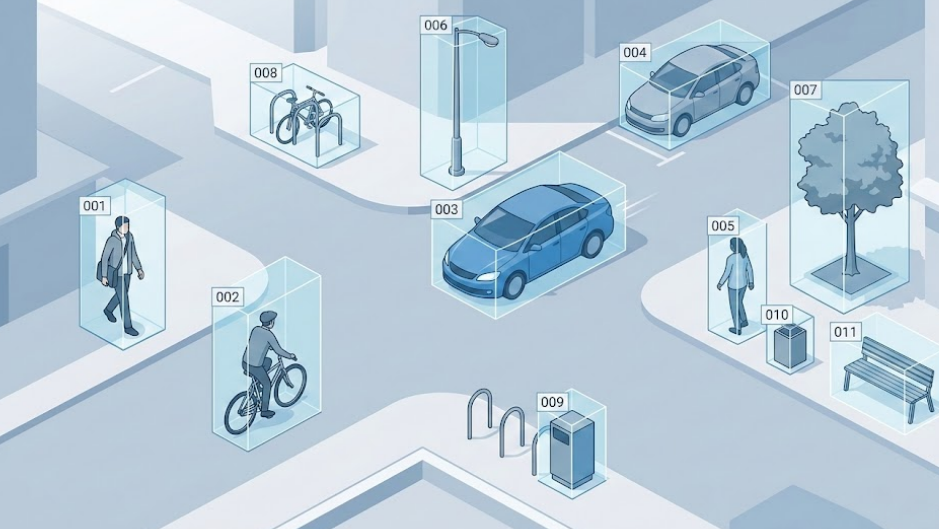
Detection-first systems are built for reaction.
They see → they trigger → they alert.
Behaviour-driven systems are built for observation.
They see → they remember → they compare → they decide.
That small difference completely changes system design.
Suddenly:
The system becomes less reactive — and more intentional.
It doesn’t rush to label every moment.
It waits for evidence.
When detection is the goal, accuracy dominates.
Higher mAP.
Higher precision.
Higher recall.
When behaviour becomes the goal, new questions emerge:
Behaviour-oriented systems are evaluated not just on correctness — but on stability and coherence.
The metric shifts from:
“Was this frame right?”
to:
“Did the system behave intelligently across time?”
That’s a very different standard.
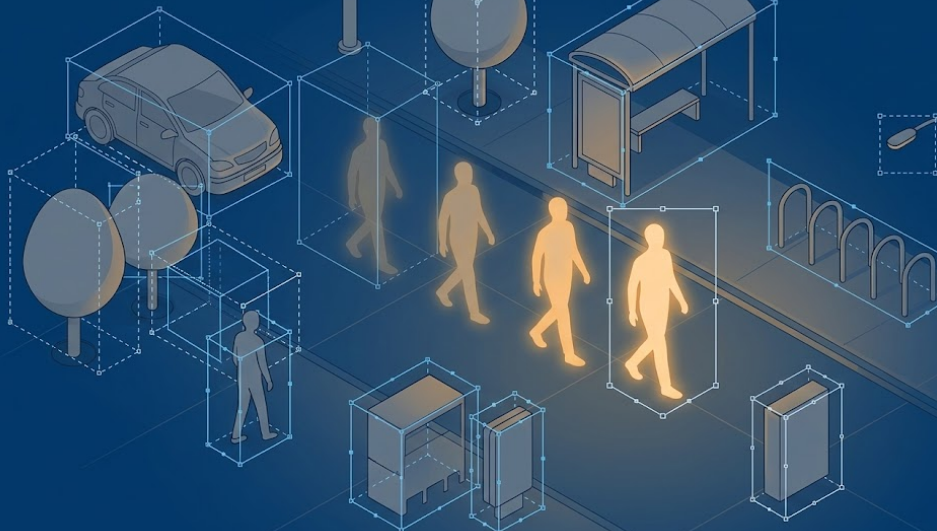
Detection lives in the present.
Behaviour lives in memory.
Once behaviour is the goal, memory stops being optional.
The system must:
Without memory, everything looks new.
With memory, patterns begin to emerge.
And patterns are where meaning lives.
This is one of the most counterintuitive changes.
When behaviour becomes the goal, the system often produces fewer alerts.
Not because it sees less.
But because it understands more.
It filters short-lived noise.
It tolerates brief anomalies.
It waits for signals to prove themselves.
To someone watching the dashboard, it might look calmer.
But that calmness is deliberate.
The system is no longer reacting to everything.
It is deciding carefully.

The biggest change isn’t technical.
It’s philosophical.
Detection-first thinking says:
“If something appears, react.”
Behaviour-first thinking says:
“If something persists, evaluate.”
That shift transforms how you:
You stop optimizing for visibility.
You start optimizing for meaning.
Detection tells us what exists.
Behaviour tells us what matters.
You can detect everything
and still understand nothing.
But the moment behaviour becomes the goal,
systems stop chasing frames —
and start interpreting stories.
And that’s when video analytics begins to feel intelligent.
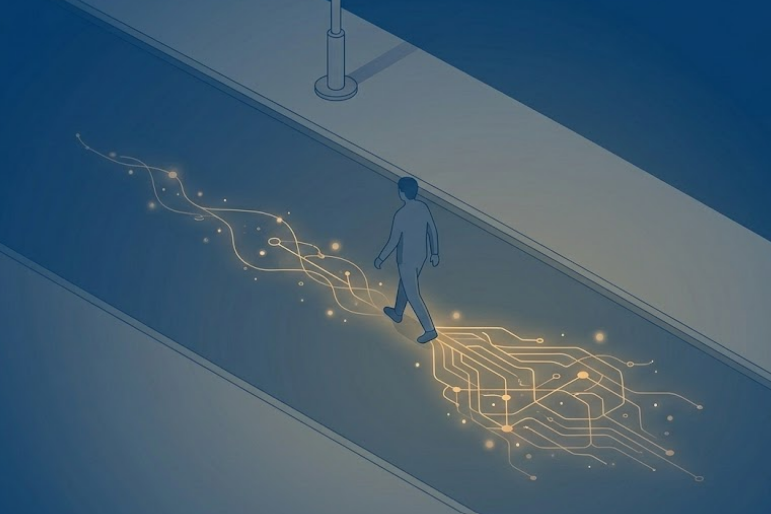
Detection sees.
Behaviour understands.
And when surveillance meets reality, only understanding survives.
First in Series : Why Accurate Detection Alone Fails Intelligent Systems