Contact Us
WhatsApp
+65 8012 2467
Email Us
contactus@thopps.com
Contact Us
WhatsApp
+65 8012 2467
Email Us
contactus@thopps.com

Learning Series: When Surveillance Meets Reality
Previous: https://varsity.thopps.com/why-detection-accuracy-does-not-equal-intelligence
Because pixels can move without meaning, and meaning can exist without motion.
A camera does not see objects.
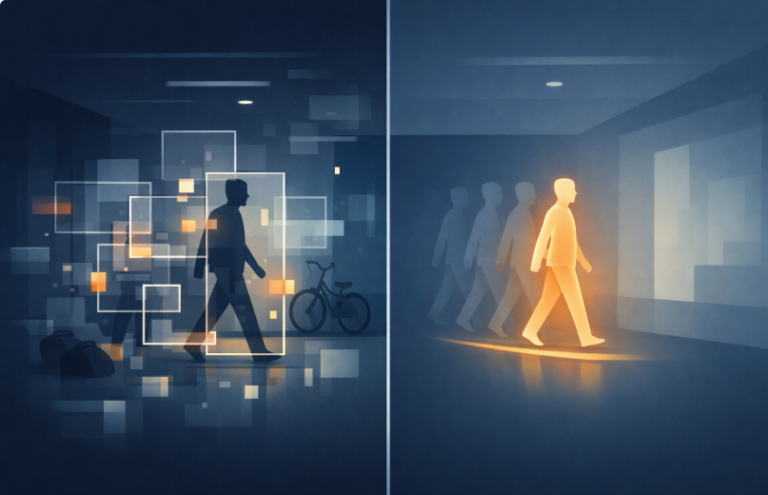
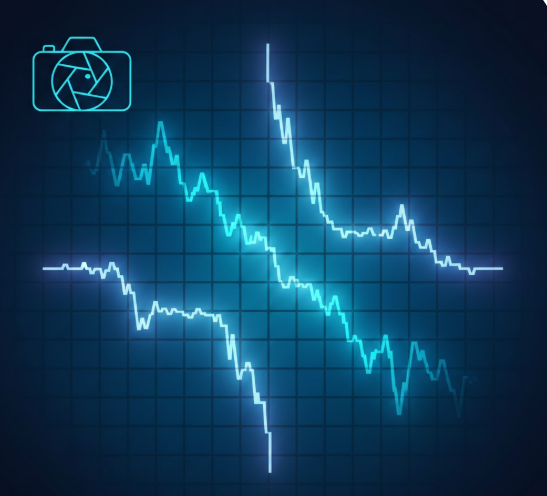
It sees changes in pixel values over time.
From the camera’s perspective, motion includes:
Even in scenes that appear completely still to humans, the video feed is constantly changing.
To a camera, stillness is an illusion.
Many early systems made a simple assumption:
If something changes, it must matter.
This worked briefly in controlled environments.
In real deployments, it fails immediately.
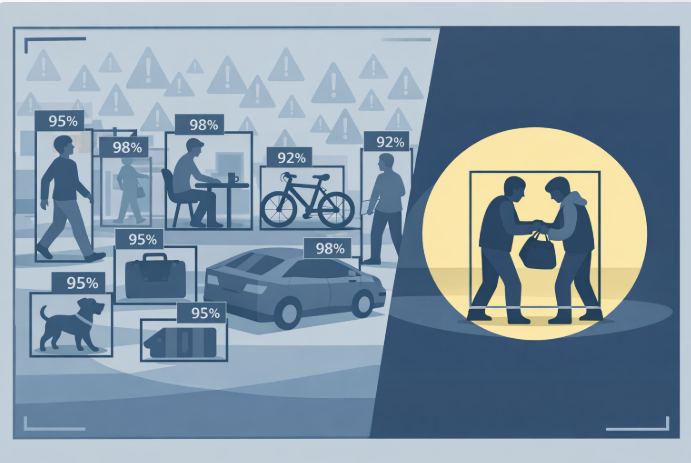
Motion-based triggers quickly lead to:
The problem is not that motion is detected incorrectly.
The problem is that motion is being treated as meaning.
Motion only tells us that something changed.
It does not tell us:
An event, by contrast, is contextual.
An event requires:
Motion alone provides none of these.
Ignoring motion is not as simple as raising thresholds.
Small movements can be meaningful.
Large movements can be irrelevant.
For example:
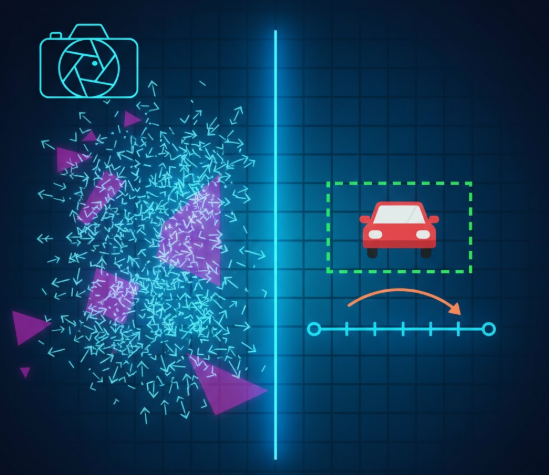
This forces systems to move beyond frame-level change and toward temporal consistency.
Modern surveillance systems rarely act on motion alone.
Instead, motion is treated as a candidate signal that must survive additional checks:
Only motion that remains stable over time becomes relevant.
This is where time transforms noise into signal.
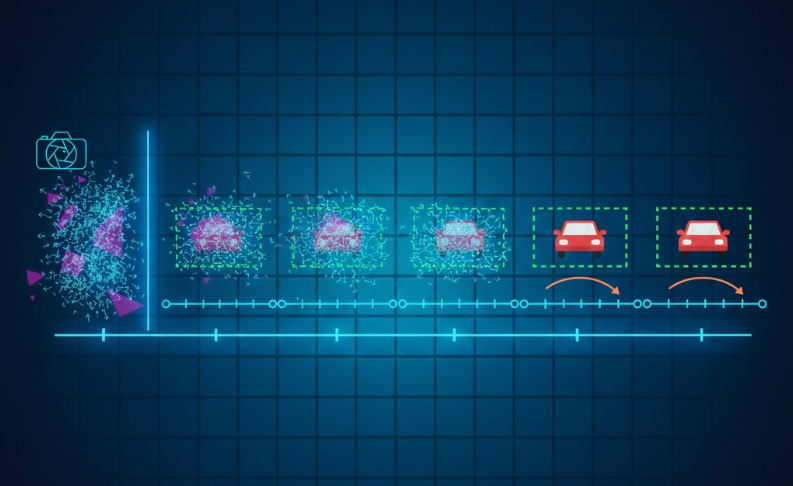
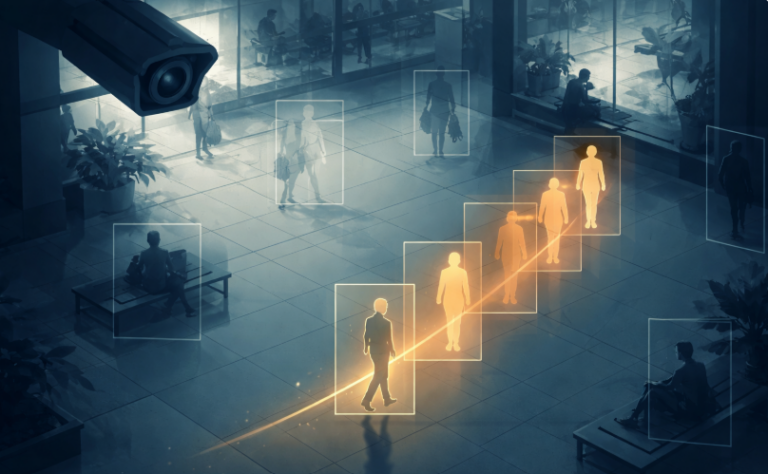
Without tracking, motion appears fragmented.
Every frame looks like a new event.
Duration cannot be measured.
Patterns cannot emerge.
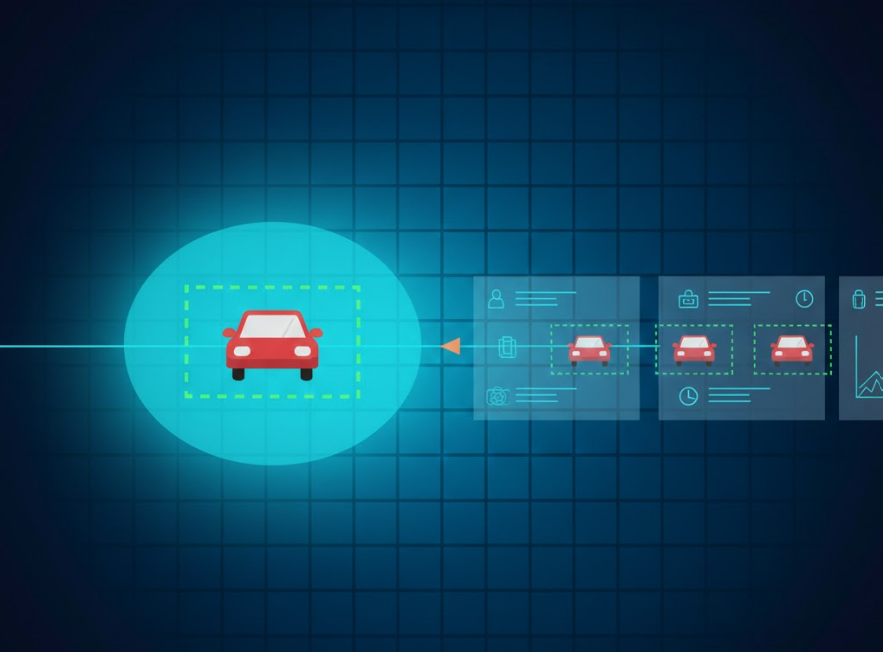
Motion becomes meaningful only when it is attached to:
This is why motion detection without tracking leads to unstable systems.
Motion is not intelligence.
Motion is attention.
It helps the system decide where to look — not what to decide.
Intelligent systems use motion to:
But decisions are always made downstream.
Motion feels obvious because humans intuitively associate movement with action.
Cameras do not share that intuition.
In surveillance systems, motion is one of the least reliable signals —
not because it is wrong,
but because it is incomplete.
Understanding begins when systems stop reacting to movement
and start reasoning about behaviour.
Motion is everywhere in video, but meaning is rare.
Only when movement is understood over time and context does it become intelligence instead of noise.
Next in Series : From Frames to Tracks: Why Identity Matters